
Alvaria
Enterprise workforce platform at scale
Product Strategy
Design Sprint
Contribution
Workshop Host
Duration
5 month
Date
2026
The problem starts before PM writes the PRD.A project might start with a leadership request:
“We need scheduling.”
It sounds clear. It isn’t.
What problem are they actually having? Why are we solving it? And are we solving the right problem at all?
But PMs were often under pressure to turn a broad request into a PRD quickly, while design and engineering came in later, after much of the direction had already been decided. The need for speed sometimes meant building the wrong thing.
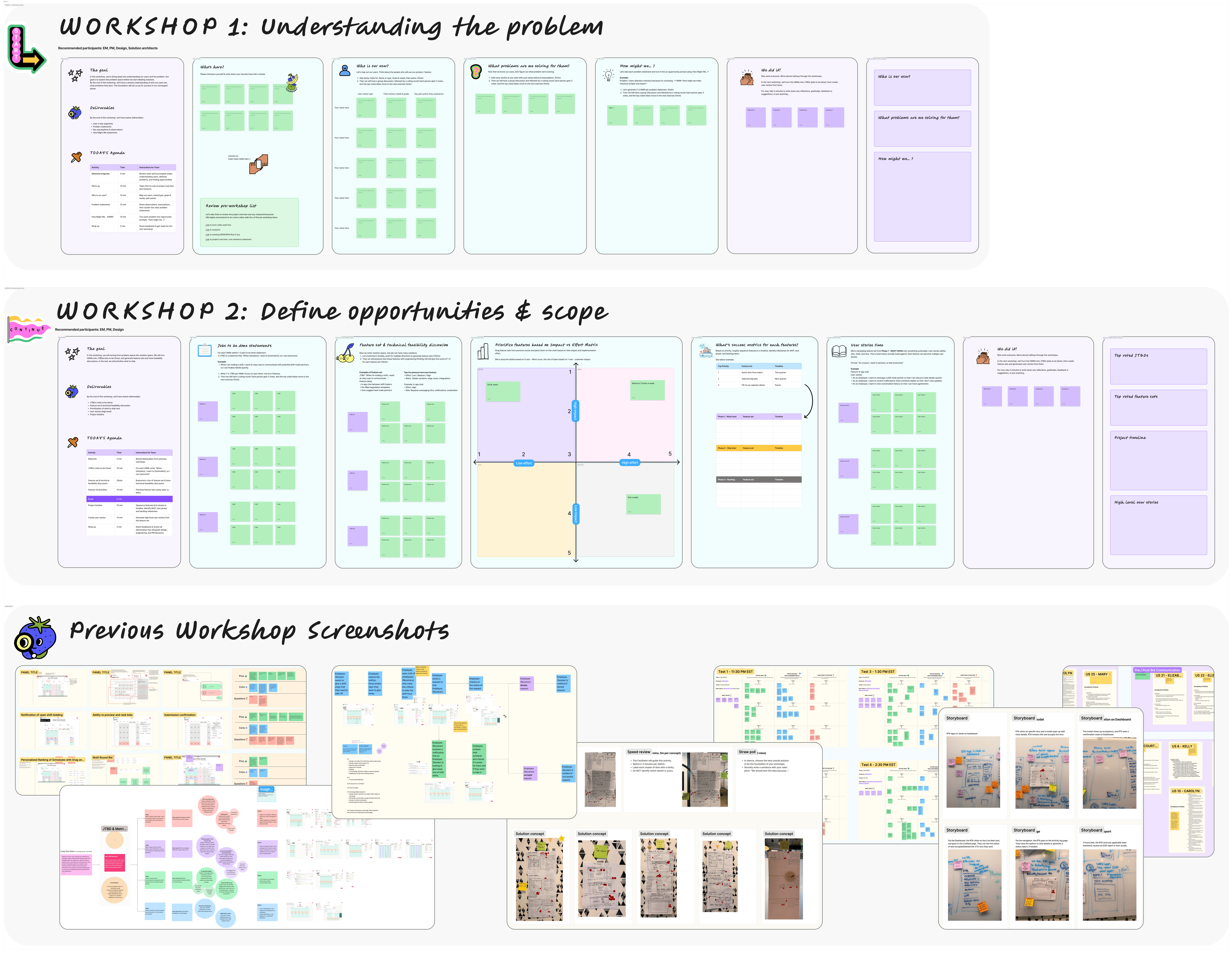
Stay in the messy part.So I created Discovery Workshops that brought product, design, engineering together before jumping into solutions. We spent time understanding the user, unpacking the problem, challenging assumptions, and asking “why” before deciding “how.”
Then we narrowed it down: problem → opportunities → priorities → user stories. PM could shape the PRD, design could start exploring, and engineering could validate feasibility, all from the same starting point.
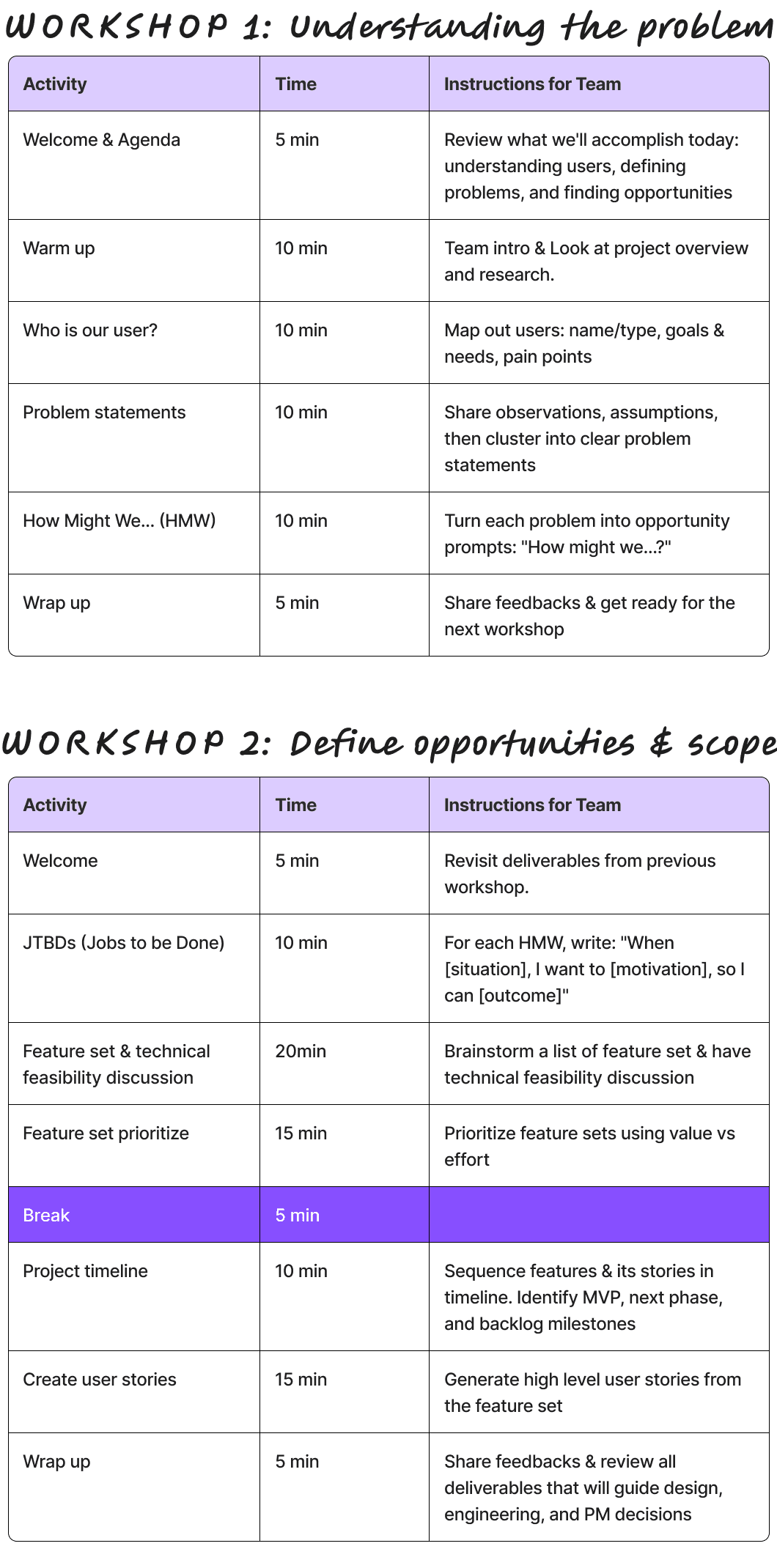
How it worksThe workshop is split into two parts:
01 · Define the Problem
Align on who we’re designing for, the problem we’re solving, and our “How might we” questions. We leave with a shared understanding of the problem space.
02 · Define the Solution
Turn those insights into Jobs to Be Done and map the key feature sets and technical considerations. We then use an impact vs. effort matrix to identify priorities and define the scope. From there, we align on the project timeline and create high-level user stories that give PM, engineering, and design a shared starting point.
ImpactFrom one workshop → company process
What started as a design led experiment became part of company ’s PDLC and new project checklist.
From late design input → earlier design influence
Designers were brought into product decisions before requirements were locked, giving them a voice in what to build, not just how it looked.
From one designer → a repeatable practice
Trained 7 designers to facilitate 12 workshops, expanding the practice across 5 teams.
Why this matters even more now.AI is making execution faster than ever.
But speed doesn’t tell us where to go. That still takes human judgment: understanding the problem, asking the right questions, and knowing why we’re building it.
That’s the part I want to spend more time on.

